


Introduction
World Mental Health Day is observed every year on 10 October to raise awareness of mental health issues and encourage collective action. World Mental Health Day 2026 centers on a powerful and overdue truth: true progress in mental healthcare starts by listening to those who know it best. The official theme for this year, “Lived experiences heard: real voices, real change,” champions the principle of "nothing about us without us," urging health systems to place individuals with direct experience of mental health conditions at the heart of policymaking and service design.
The Global and National Picture
Mental health challenges remain a universal public health crisis, yet support systems have historically struggled to adapt.
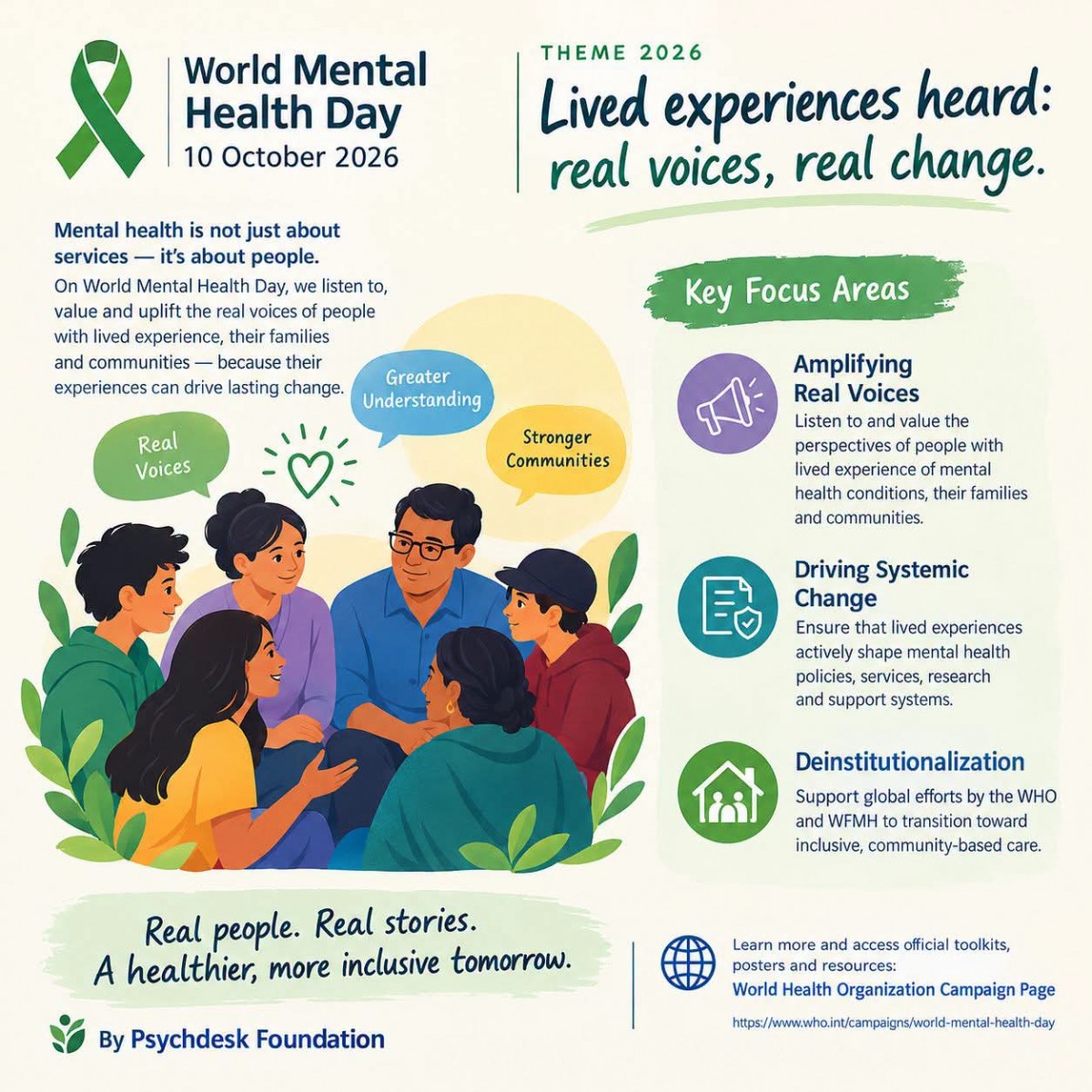
Key areas for action in Nepal
People with mental health conditions, their families, caregivers, and community members should have opportunities to participate in public discussions, research, and policy development. Their perspectives should inform decisions about the services they use and the support they need.
Mental health conditions should be discussed with the same respect afforded to physical health conditions. Public awareness campaigns, school programs, media engagement, and community dialogue can challenge harmful stereotypes and encourage early help-seeking.
Families and communities can contribute by listening without judgement, maintaining confidentiality, and supporting individuals throughout recovery.
Mental health services should be integrated into primary health care, general hospitals, schools, and community settings. Community-based services, counselling, psychosocial rehabilitation, peer-support groups, and appropriate specialist referrals can help people receive care closer to their homes. Nepal should continue strengthening the capacity of health workers to identify and manage common mental health conditions and refer individuals who require specialized care.
Prioritizing suicide prevention
Suicide prevention requires coordinated action across health services, schools, families, communities, and government agencies. Important measures include early identification of distress, appropriate assessment, timely treatment, follow-up support, responsible media reporting, and reducing access to highly hazardous means of suicide. People experiencing suicidal thoughts should be approached with compassion and connected promptly with qualified professionals and available emergency support.
Promoting mental health among children and young people
Schools and universities should promote emotional literacy, coping skills, supportive relationships, anti-bullying measures, and access to confidential counselling. Parents, teachers, and health professionals should be equipped to recognize warning signs and guide young people towards appropriate assistance.
Strengthening research, policy, and accountability
Nepal needs continued investment in reliable mental health data, research, trained personnel, and accessible services. Research should include the perspectives of people with lived experience and examine differences in access to care across geographical, socioeconomic, and demographic groups.
Evidence should be translated into measurable action, with clear responsibilities for implementation and evaluation.
The role of health professionals, researchers, and communities
From listening to meaningful change
Conclusion
This World Mental Health Day, let us listen with empathy, act with compassion, and turn real stories into real change. Together, we can build a healthier, kinder, and more inclusive tomorrow.
Kamala Saki Shrestha
Deputy Nursing Controller, Tribhuvan University Teaching Hospital





संचार रजिस्ट्रार कार्यालय दर्ता नम्बरः 00116
सम्पादक : भावना भट्टराई
भक्तपुर , सूर्यविनायक २
healthykhabar@gmail.com
सम्पर्क नम्बरः ९८४९१५१३१३
संचार रजिस्ट्रार कार्यालय दर्ता नम्बरः 00116
सम्पादक : भावना भट्टराई
भक्तपुर , सूर्यविनायक २
healthykhabar@gmail.com
सम्पर्क नम्बरः ९८४९१५१३१३
© 2026 All right reserved to Healthykhabar.com | Site By : SobizTrend

